Outdoor Dining in San Diego: Plan for the Whole Meal
Outdoor Dining in San Diego: Plan for the Whole Meal
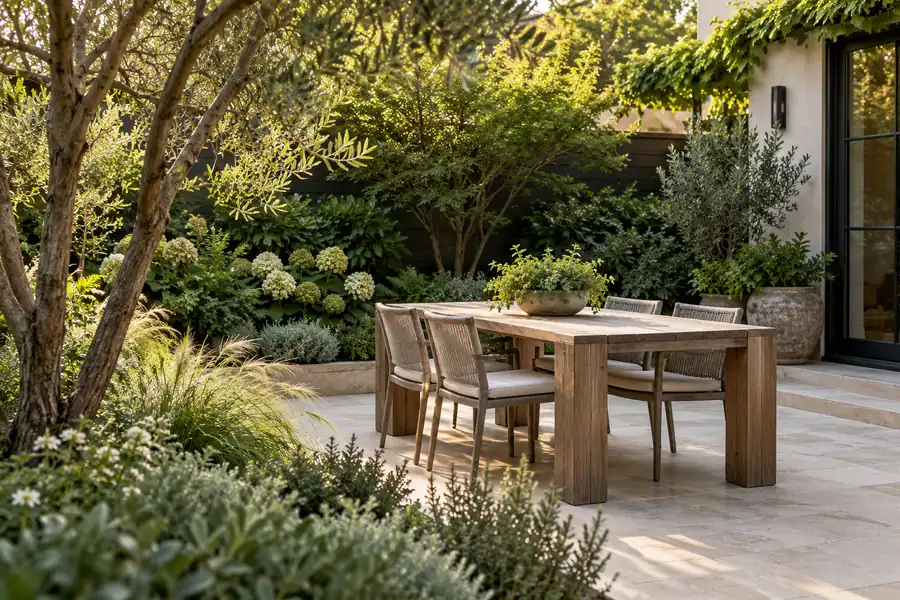
An outdoor dining area should stay comfortable from the first plate to the last cup of coffee. That means room to pull back a chair, a clear route from the kitchen and shade where people are sitting throughout the meal.
Start with when and how you want to eat outside. A San Diego breakfast spot and a table for early-evening dinners may need different positions and shade. Use the steps below to test the furniture, sun, serving space and storage before buying or building.
Choose a meal and rehearse it
Write down a typical gathering: how many people, what time you start and how long you stay. Include everyday use as well as occasional guests. Then set up a temporary table and chairs in the likely location.
Rehearse serving a meal with empty plates or a tray. Open the back door fully. Walk from the kitchen to each end of the table, then back past someone who is seated. Try carrying dishes while another person comes indoors.
Record the awkward moment rather than immediately enlarging the patio. Turning the table, changing its proportions or moving a serving surface may solve a problem more neatly than adding paving.
Draw the space with people in the chairs
Furniture dimensions are only the starting point. Mark the table, then show chairs in use and pulled back far enough for people to stand comfortably. Add the route people will take behind them.
Pay special attention to the end seats. They often sit closest to a step, planting edge or doorway. If a wheelchair, walker or stroller will use the space, test the relevant movements and make those needs explicit in the design brief. Avoid substituting a generic clearance number for the household's actual requirements.
Try the complete arrangement with the furniture you intend to buy or pieces of similar dimensions. Include umbrella bases and storage boxes. A chair that fits beneath the table in a photograph may occupy a very different space during dinner.
Judge shade at eye level and over time
Sit in every position at the intended meal time. Notice direct sun on faces, brightness reflected from nearby surfaces and which seats lose shade first. Photograph the arrangement again partway through the meal window.
The U.S. Department of Energy's landscaping guidance emphasizes the size, shape and location of a shade source's shadow and notes the lower angle of afternoon sun from the west. For a dining terrace, that makes the location of the shadow more useful than the size of the canopy alone.
Ask a designer to review the intended seating times across seasons. An overhead structure may still leave a diner facing low sun from the side. Compare adjustments to table orientation, shade position and screening before settling on a larger structure.
Match the shade option to its everyday routine
For an umbrella, consider how it opens, who will operate it and where the base sits. Check the manufacturer's requirements for the exact model, including support and wind precautions. Make sure opening, closing or storing it does not require moving the dining table every time.
For a fixed shade structure, request a site-specific review of attachment, support, wind exposure and applicable approvals. Include posts on the furniture plan early. Ask how lighting and future maintenance will be accessed.
A tree can be part of the longer-term design. The local Master Gardeners' plant-selection guidance stresses matching plants to San Diego County's varied conditions and allowing space for mature size. Discuss canopy shape, growth, roots and seasonal litter with the person selecting the tree. Plan separately for the shade you need while it establishes.
Give serving and storage a deliberate place
A modest landing surface near the door can keep bowls, drinks and spare plates off the main table. Test its position during the rehearsal. It should be reachable without narrowing the busiest route or becoming a place people must squeeze past.
Decide where cushions, table coverings and the items used for an ordinary meal will live. Try the process of setting up and putting away. If dining outside involves several trips through the house, simplify the routine before buying more furniture.
For evening use, test lighting from seated eye level. Aim for enough light to see food and the route indoors without a bright source dominating the table. Have any permanent electrical work assessed and installed by an appropriately qualified professional.
Make one adjustment, then try another meal
Use the space twice before finalizing the design: once for your most common meal and once with the fuller guest arrangement. Keep a short list of what worked and what felt awkward.
The final brief can be simple: comfortable seating for the usual household, a workable guest arrangement, shade at the relevant hours and a clear path for serving. Those specific requirements give furniture, planting and shade a shared purpose. The result is an outdoor table that is easy to choose on an ordinary day.
Sources checked October 12, 2026.
Plan the space around the table
Explore outdoor living ideas with your seating count, meal times and shade needs in mind.
