Planning a San Diego Patio: What to Decide Before Pavers
Planning a San Diego Patio: What to Decide Before Pavers
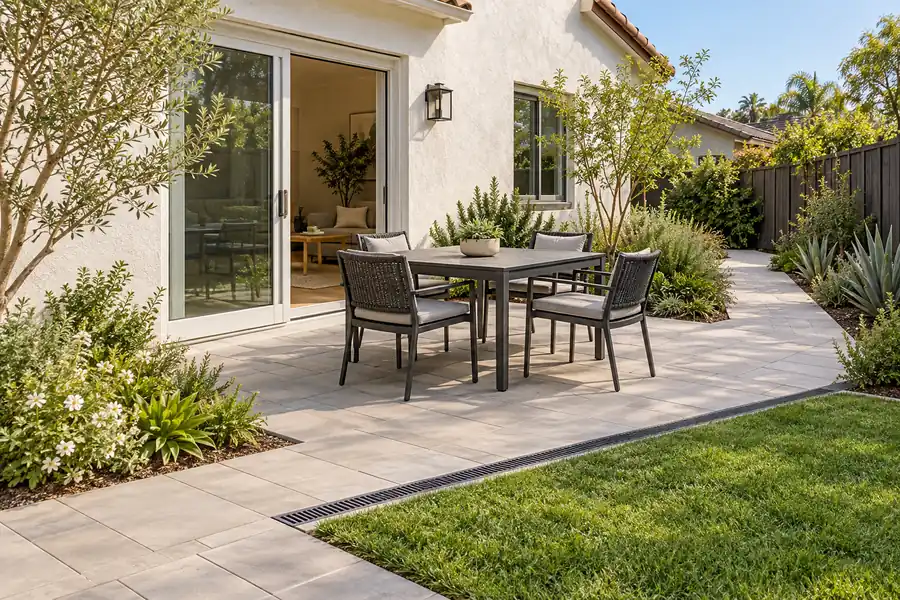
A patio needs room for more than the furniture. Chairs have to pull back, doors have to open and someone needs to carry dinner past the table. Testing those movements before choosing pavers helps you work out the shape and size your yard actually needs.
Use this San Diego patio-planning checklist to work through the layout, material samples, drainage questions and installation scope. You will have a more useful brief to compare proposals with, including the details that are easy to miss when choosing a finish.
Start with the table, chairs and walking routes
Choose the furniture category before choosing the final patio outline. A dining table, a pair of lounge chairs and a long outdoor sofa ask for different shapes. Use tape, chalk or a garden hose to mark the main pieces at full size. Pull chairs back and walk around them carrying something bulky.
Test the route from the kitchen to the table, the route to the bins, and access to any garden equipment. Keep doors, gates and service access in the sketch. If a wheelchair, walker or stroller will use the space, make that part of the design brief from the beginning.
Take a photo of the mock-up from indoors. The terrace should also look balanced from the rooms that face it. A slightly smaller seating area with a generous planting edge may be more inviting than paving every available corner.
Compare samples where the patio will actually be
Bring home samples and view them beside the house in morning and afternoon light. Put them near the existing wall finish, thresholds and any surface you plan to retain. Look at them dry and damp, where the supplier permits that test, because the appearance can change.
Instead of asking which material is best in general, compare the exact products:
Concrete pavers: Do the module size, pattern and edge detail suit the scale of the yard?
Natural stone: Are you comfortable with the color and texture variation across a representative selection?
Outdoor porcelain: Is this specific product and installation system suitable for the intended outdoor use?
Loose-surface areas: Will the proposed finish work with your chair legs, footwear and mobility needs?
Ask about wet-surface traction, heat in direct sun, cleaning, staining and future repairs. Request the manufacturer's care information. A small showroom sample cannot answer every question about a finished, installed surface.
Treat permeable paving as a complete system
If reducing runoff is one of your goals, ask whether a permeable pavement system suits the property. The visible paver is only part of that discussion. Joints, underlying layers, soil conditions and ongoing maintenance all matter.
The City of San Diego's stormwater guidance describes permeable surfaces that let water pass through and cautions against infiltration where it could create geotechnical or groundwater concerns. It also discusses keeping paver joints clear so the system can continue to work.
Use that as a prompt for a site-specific conversation. Ask the designer what the proposed assembly is meant to do, how its suitability will be checked and how it will be maintained. Avoid assuming that ordinary pavers automatically make a patio permeable.
Ask where water goes before and after the work
Collect photographs after rainfall if you can do so safely. Mark existing puddles, downspouts, drains and changes in level. Explain any history of water near the house or along a shared boundary. Those details belong in the first discussion, even if the visible project seems small.
Ask the project team to explain the proposed drainage approach in plain language, including what happens when the intended route cannot take more water. Have a qualified professional assess grading, drainage and any structural concerns. This planning checklist does not specify slopes, excavation depths or drainage construction.
San Diego addresses do not all fall under the same local authority. Confirm the property's jurisdiction and which project reviews apply. The City's Stormwater Department and the County's Watershed Protection Program are separate resources; your project team should identify the appropriate agency rather than transfer a rule from another property.
Compare the full scope before comparing the finish price
Ask each proposal to describe demolition and disposal, access, base preparation, edges, drainage work, installation and site cleanup. Confirm what is excluded and how unexpected conditions will be handled. If planting and irrigation meet the new patio, include those transitions in the conversation too.
For your first meeting, bring the furniture dimensions, site photos, two or three material references and a list of existing problems. Identify your priorities in order: perhaps easier dining, a comfortable walking surface, simpler maintenance and a softer view from the house.
A well-planned patio makes those everyday moments feel easy. Clear decisions early on give the materials a much better foundation to work from.
Sources checked October 12, 2026.
Compare patio options
Review the patios and pavers overview with your furniture layout, drainage questions and preferred materials in mind.
