Privacy Planting for a Smaller San Diego Yard
Privacy Planting for a Smaller San Diego Yard
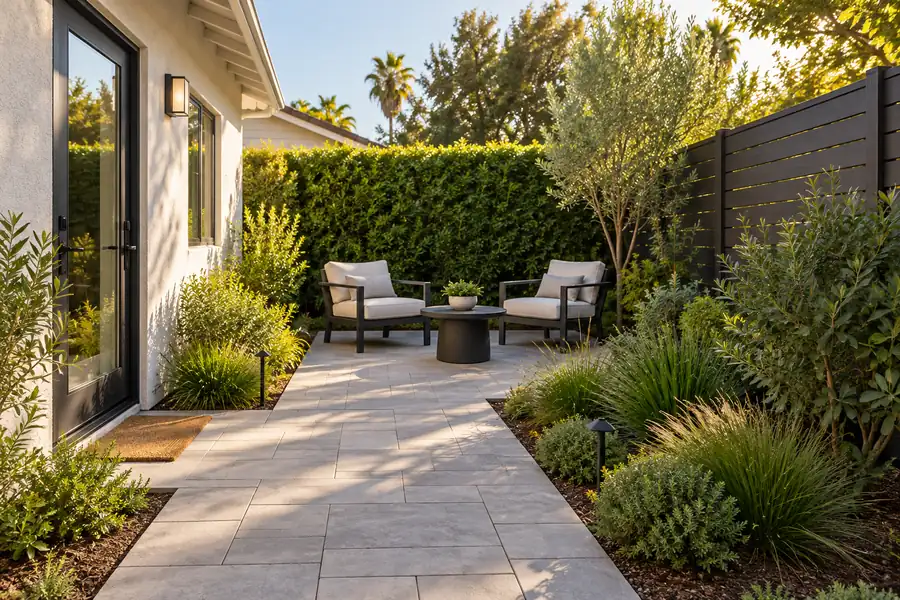
Privacy planting works best when it screens the view that bothers you without taking over the yard. That might be a nearby balcony, a kitchen window or the gap beside a gate. Start by looking from the seat or room where you want more privacy.
This guide helps you define the height and width of the screen, allow for mature plants and check access, roots, light and watering. Those decisions will narrow the plant choices for a small San Diego yard while leaving room to move and sit comfortably.
Mark the view you need to soften
Take a photograph from your usual seated position. Draw over the part of the view that bothers you, leaving anything you enjoy visible. Repeat from standing height. Ask whether you need year-round concealment or simply a softer outlook around a summer seating area.
Try moving the chair or table before changing the planting. A modest shift may let an existing shrub interrupt the view. Use a freestanding, safely positioned temporary visual marker to judge the height and width of a proposed screen; do not lean unstable objects against a fence.
The UC Master Gardeners' discussion of privacy hedges makes height, neighboring views and the shade cast by a screen part of plant selection. Those questions travel well to San Diego; its Napa-specific plant examples should not be treated as a local shopping list.
Give the screen a realistic footprint
Measure the planting bed at its narrowest point. Mark doors, gates, taps, drains and the route used to carry bins or equipment. The usable planting area is what remains after these everyday needs are accounted for.
Sketch candidate plants at their expected mature width. Include space for someone to inspect irrigation and perform the proposed pruning. If the only workable plan requires keeping a naturally broad plant permanently thin, continue the search.
UC Agriculture and Natural Resources recommends selecting shrubs whose mature size fits the available space without constant pruning. That is especially valuable when a bed runs between a boundary and a narrow patio. Compare the named cultivar rather than relying on a general common name that may cover several sizes.
Choose a screening approach before a species
A clipped hedge gives a clear outline, but the maintenance plan needs to explain how that outline will be kept. Ask who will reach the top and both sides, where cut material will go and how the planting will look between visits.
A looser group of shrubs can create a softer edge. Draw the individual grown-up shapes to see whether the important view will be interrupted or whether gaps remain exactly where privacy matters. Do not assume every shrub stays equally leafy at its base.
A vine on a suitable support may be worth discussing where ground space is limited. Its support, attachment, mature weight and access for care all need consideration. Ask a qualified project professional to assess the proposed support and any reviews needed for the property before treating it as a simple planting purchase.
Ask about what happens below the screen
Bring a marked plan of nearby paving, retaining walls, drains, utilities and existing trees to the plant discussion. Ask how each candidate's roots and eventual size suit those relationships. The UC privacy guidance also raises roots and potential effects on neighboring property as selection questions.
Avoid treating “non-invasive roots” on a sales label as a blanket promise. Request an explanation for the specific plant and site. Do not cut existing roots or trench through a tree's growing area just to fit a new hedge; get qualified advice where established trees are involved.
Write down who will investigate hidden constraints before digging. If a contractor is preparing the work, ask how underground services will be located and protected. A tidy drawing is still incomplete until those questions are answered.
Check light, water and the long-term view
A screen also becomes part of the growing environment around it. Consider the light you want at the kitchen window and in adjacent planting beds. Mock up the proposed position and height before committing to a continuous boundary treatment.
For San Diego conditions, record afternoon sun, observed frost and exposed wind at the actual planting strip. Have the palette and irrigation reviewed together, including any neighboring plants that already share the watering zone. Ask for an establishment plan and an honest discussion of how coverage will change over time.
Finish with a short brief: the view to soften, the minimum useful coverage, available bed width, plants to preserve and the amount of clipping you are willing to arrange. Those five decisions make it much easier to build privacy that still leaves room to enjoy the garden.
Sources checked October 12, 2026.
Fit the screening into your planting plan
Review landscape and planting options with your sightline photos, bed measurements and preferred level of pruning in mind.
