A Water-Wise San Diego Yard Starts With a Better Plan
A Water-Wise San Diego Yard Starts With a Better Plan
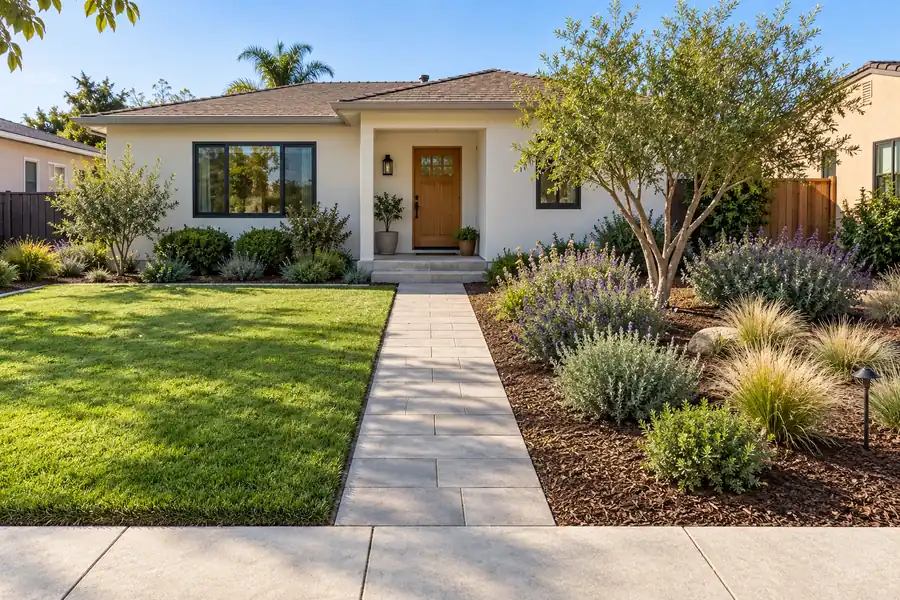
Before choosing low-water plants, decide what your yard needs to do. Keep room for the things you use it for: morning coffee, a path to the front door, space for a dog or an easy-to-care-for planting bed. Those choices will shape where lawn, paving and planting belong.
This guide walks through five decisions for a water-wise San Diego yard: mapping the site, choosing what stays, allowing for mature plants, planning irrigation and setting a maintenance routine. Start with your own sun, shade and soil conditions so the plan fits the place you are planting.
1. Make a one-page map of your existing yard
Sketch the house, gates, paths, trees and areas you want to keep. Add where you sit, where people cut across the lawn, and where bins or garden tools need to travel. Then walk outside in the morning, around midday and late afternoon. Mark sun, shade, reflected heat and exposed corners.
Photograph any wet spots after rain or irrigation. Record them as questions for your designer rather than assuming that a new planting bed will solve the problem. Preserve information about existing trees and irrigation before anything is removed.
The San Diego County Water Authority's regional WaterSmart resources include different landscape templates for coastal, foothill and inland conditions. They are useful starting points for comparing layouts. Your own site observations should guide the final choice.
2. Decide what earns a place in the layout
Look at each area of lawn and ask how you use it during an ordinary week. A regularly used play space has a different job from a narrow strip beside the driveway. Draw the activity area you actually need, then consider planting around it.
Keep the route between the back door and your main seating area simple. Avoid adding a winding path just to fill space. If you want a dining table, lay out its footprint and pull the chairs back before deciding where the planting starts.
This is also the moment to list what stays. An established tree, a comfortable existing terrace or a good view can organize the entire project. Building around those strengths often produces a more convincing garden than replacing everything at once.
3. Choose plants at their grown-up size
A nursery pot shows the plant you buy; the planting plan needs to show the space it will occupy later. Check mature width as carefully as height, especially alongside paths, windows and seating. Leave a reason for each plant to be there: structure, seasonal flowers, screening or a softer edge.
For a cohesive look, repeat a small number of compatible plants in generous groups. Use one or two accents where they will be noticed from the house. A mixed collection of individual favorites can be harder to maintain and harder to read visually.
The local Master Gardeners' plant-selection guidance highlights the differences between coastal and inland growing conditions, along with mature size, sun exposure and water needs. Use those checks to narrow a shortlist before choosing flowers by color alone.
4. Put irrigation on the plan early
Ask how the proposed planting groups connect to the irrigation already in place. Plants with similar water needs and exposure should be considered together. The Water Authority calls these groups hydrozones in its Sustainable Landscaping Guidelines.
For the consultation, write down three questions: Which existing valves and lines can be reused? How will plants with different needs be watered separately? Who will adjust the schedule as the garden establishes?
A low-water plant still needs an establishment plan. The Water Authority's Nifty 50 guide distinguishes water-wise established plants from newly installed plants that need extra attention. Ask for plant-specific instructions and a clear handover, including how to inspect the system and whom to contact if a plant struggles.
5. Finish with a realistic maintenance brief
Describe the level of involvement you actually want. Do you enjoy seasonal pruning? Will someone inspect irrigation while you travel? Can the planting remain attractive without frequent clipping? Decide this while the palette is still flexible.
Bring these five things to a first conversation:
A rough sketch and photographs of the current yard
The two or three outdoor activities that matter most
Notes on sun, shade and existing wet spots
A list of plants, trees and surfaces you hope to keep
Your maintenance expectations and preferred project phases
A thoughtful first plan connects the way you live with the conditions your garden already has. The plant list comes into focus much more easily after that.
Sources checked October 12, 2026.
Choose plants for your part of San Diego
Use the coastal-and-inland planting guide to turn your sun, shade and exposure notes into a plant shortlist for each bed.
